
Author: Site Editor Publish Time: 2026-11-18 Origin: Site
The transition from manual to motorized surgical staplers represents a critical decision point for hospital procurement and surgical departments. You must carefully balance upfront acquisition costs against potential clinical improvements. Manual staplers have a long-established, proven track record in minimally invasive surgery. They offer high reliability and provide direct tactile feedback to the operator. However, powered devices are increasingly adopted to standardize staple line formation. They also significantly reduce surgeon hand fatigue during complex, repetitive surgical procedures. This comprehensive guide provides an evidence-based comparison of manual versus powered stapling systems. We will deeply explore the mechanical differences, clinical outcomes, and implementation realities associated with each technology. You will gain clear, actionable insights to support your hospital value analysis committees in their selection process. We aim to help you navigate this technological shift with absolute confidence, ensuring you choose the right tools for your surgical teams.
Powered devices offer more consistent firing speeds and tissue compression, which clinical data suggests may reduce the risk of staple line leaks in thick tissue applications.
Manual staplers provide direct tactile feedback during firing and maintain a lower per-unit acquisition cost, making them highly viable for routine procedures.
Successful deployment requires evaluating reload compatibility, battery disposal compliance, and surgeon learning curves.
We must first define the mechanical baseline of these devices. How do these instruments generate firing force? How do they deliver that force to the anvil to form staples? Understanding these core mechanics helps you make informed clinical choices. The mechanism of action directly impacts both surgeon experience and patient tissue integrity.
Manual Endoscopic Cutting Staplers rely entirely on the surgeon's physical grip strength. You squeeze the handle mechanism to drive the internal knife blade forward. This mechanical action sequentially deploys the staples into the targeted tissue. The primary advantage of this design is continuous tactile feedback. Surgeons can physically feel the tissue thickness and structural resistance as they squeeze. This sensory input allows them to pause if they encounter unexpected density. However, this manual squeezing mechanism introduces a specific clinical risk. It makes the device highly prone to unintended micro-movements at the distal tip. Every time the hand squeezes, the tip can shift slightly off the target line.
Conversely, Powered Endoscopic Cutting Staplers utilize a battery-powered internal motor. This sophisticated motor automates the entire firing sequence from start to finish. They deliver a continuous, remarkably steady firing stroke. Changing tissue density does not alter this consistent mechanical speed. You completely eliminate the need for manual squeezing during the transection phase. This automation significantly reduces distal tip movement, keeping the jaws perfectly aligned. It also drastically cuts down on surgeon hand fatigue during complex, multi-fire cases. The motor handles the heavy lifting, allowing the surgeon to focus purely on positioning and technique.
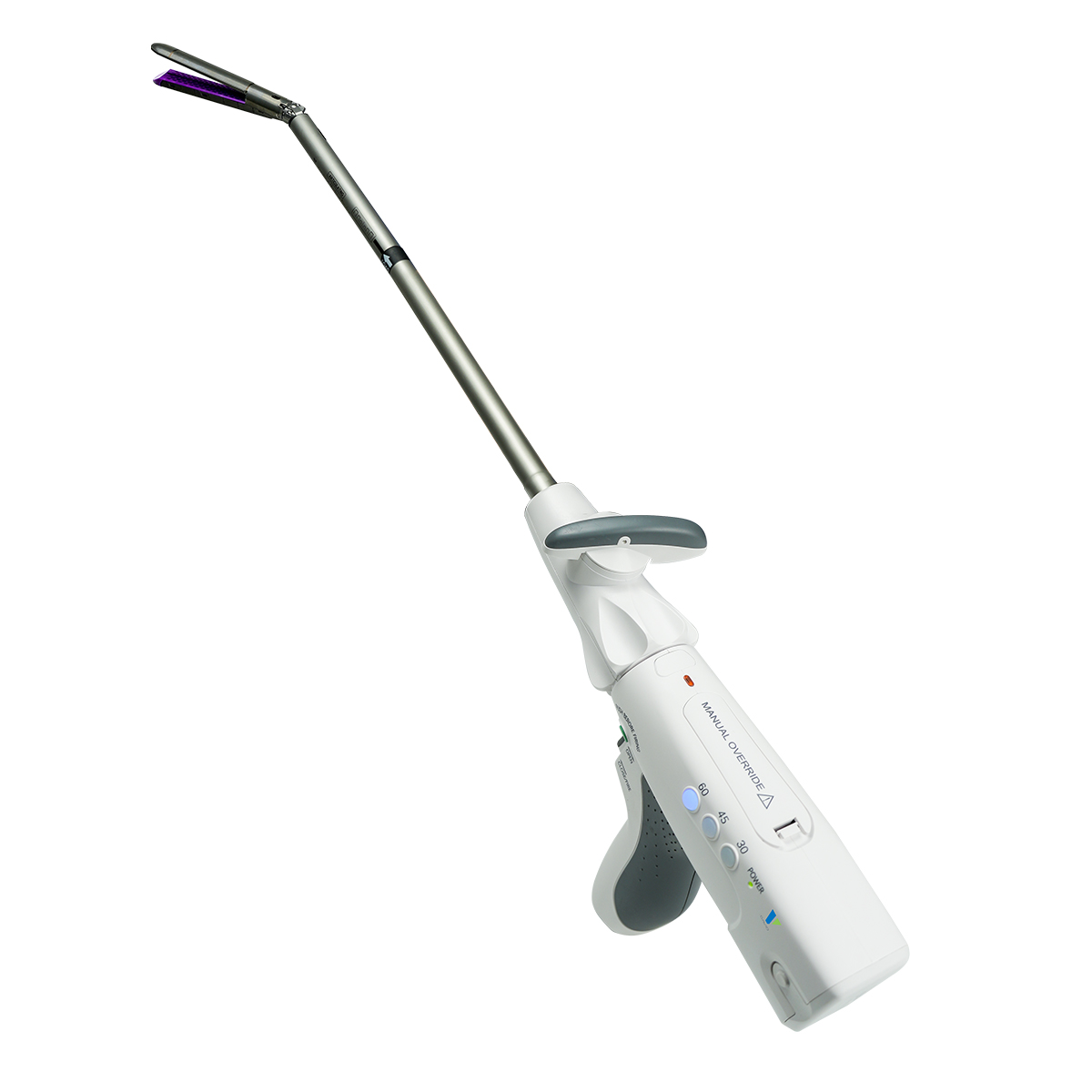
Clinical outcomes remain the absolute top priority for any surgical department. Let us compare how these two differing systems impact patient safety and overall surgical success. We must examine how mechanics translate into biological healing.
Staple Line Integrity: Automated firing provides an incredibly consistent force profile. Manual firing speeds often vary wildly based on a surgeon's grip strength and fatigue level. Consistent tissue compression is crucial in challenging surgical environments. Thick gastric tissue in bariatric surgery or dense bronchial tissues demand perfect staple formation. Automated systems excel at maintaining this uniform pressure, which helps create a secure, leak-proof seal.
Distal Tip Stability: Motorized Surgical Staplers eliminate the aggressive manual firing squeeze. This streamlined design heavily reduces unintended movement at the delicate surgical site. A stable distal tip minimizes surrounding tissue trauma. It keeps the transection line exactly where you intended, preventing sheer stress on the newly formed staples.
Complication Rates: We evaluate standard clinical metrics like anastomotic leak rates and intraoperative bleeding. Consistent staple deployment generally improves immediate hemostasis along the cut line. While we cannot make guaranteed medical claims, uniform compression logically supports better biological sealing. Reducing variability in the firing stroke naturally mitigates the risk of malformed staples.
Surgeon Fatigue: Prolonged, complex surgeries demand intense mental and physical focus. Surgeons performing multiple consecutive cases face severe physical exhaustion in their hands and forearms. Powered devices offer significant, measurable ergonomic benefits. They remove the repetitive physical strain of manual firing. Fresh, rested hands contribute directly to safer, more precise surgical outcomes at the end of a long shift.
Procurement teams face the constant challenge of balancing strict budgets against clinical value. You must look far beyond the initial price tag to understand the true impact of your purchasing decisions.
Direct acquisition costs strongly favor manual devices. Budget-conscious facilities appreciate this clear, undeniable price advantage. They remain a highly effective staple for many standard, low-complexity procedures. If your facility operates on razor-thin margins, manual devices provide reliable performance at a fraction of the upfront cost.
However, comprehensive value analysis requires a much broader perspective. You must factor in potential decreases in operating room (OR) time. Fewer intraoperative bleeding events can reduce patient length of stay. A powered device might cost significantly more upfront. Yet, saving several minutes of expensive OR time per case offers substantial financial relief. Faster, more reliable transections keep the surgical schedule moving efficiently.
Supply chain implications also demand your careful attention. Are your chosen reloads cross-compatible across different handles? You must assess the inventory management of Disposable Endoscopic Cutting Staplers versus modular, reusable systems. Standardizing reloads across your entire hospital platform simplifies purchasing and reduces shelf-space requirements.
Finally, consider environmental and disposal compliance. Powered units contain lithium or alkaline battery packs. These batteries require specific disposal workflows and strict regulatory compliance to avoid environmental fines. Fully mechanical manual units avoid these strict electronic waste protocols entirely. You simply dispose of them in standard biohazard containers.
Table: Procurement Comparison: Manual vs Powered Systems
Evaluation Criteria | Manual Systems | Powered Systems |
|---|---|---|
Direct Acquisition Cost | Significantly lower per unit | Higher initial capital investment |
Operating Room Efficiency | Standard baseline performance | Potential time savings per case |
Environmental Disposal | Standard biohazard waste protocols | Strict battery disposal regulations |
Inventory Management | Straightforward SKU tracking | Requires strict reload compatibility checks |
Adopting new surgical technology always introduces operational friction. You must proactively manage these implementation risks to ensure a smooth transition for your surgical staff.
Transitioning to powered systems involves a surprisingly steep learning curve. Surgeons must actively unlearn their deep reliance on tactile feedback. They can no longer physically "feel" the tissue resistance through the handle. Instead, structured training must help them trust the device's internal computer. They must learn to rely entirely on visual LED indicators and audio beeps. This shift requires dedicated dry-lab practice before entering the live OR.
Device troubleshooting represents another critical reality. Intraoperative device failures happen, regardless of brand quality. A battery might deplete prematurely during a long case. A motor might stall mid-fire due to extreme tissue density. You need robust, well-rehearsed backup protocols. Your surgical team must know exactly how to manually override a stalled motorized stapler using the emergency return wrench.
Standardization challenges also plague mixed inventories. Running manual and powered devices simultaneously creates dangerous confusion. Rapid instrument hand-offs in the OR become highly risky. Scrub nurses might hand a surgeon the wrong handle or an incompatible reload cartridge. User error increases dramatically when teams constantly switch between different firing mechanics.
Common Mistakes: Mixing reload brands across manual and powered platforms. Always verify cartridge compatibility before the patient enters the room.
Best Practices: Designate specific ORs or specific service lines for powered device rollouts. This targeted approach minimizes inventory confusion and accelerates team mastery.
Selecting the right technology depends heavily on your facility's specific clinical needs and financial realities. Use this structured framework to guide your committee's shortlisting process.
You primarily perform routine, low-complexity procedures. Tissue thickness remains highly predictable in these standard cases.
Your facility operates under strict, immediate budget caps. Your clinical outcomes already meet or exceed high national benchmarks.
Your lead surgeons heavily prioritize tactile feedback. They use this physical sensation for critical intraoperative clinical decision-making.
You manage high-volume bariatric, thoracic, or colorectal centers. These demanding specialties routinely deal with thick, vascular, or challenging tissue.
Your hospital focuses heavily on standardizing surgical techniques. You want consistent, repeatable results across a wide variance of surgeon experience levels.
Your institution aims to improve surgeon ergonomics. You actively want to reduce repetitive strain injuries and extend the career longevity of your surgical staff.
Neither stapling technology is universally superior for every hospital. Your optimal choice depends entirely on procedural volume, budget constraints, and specific clinical challenges. Manual devices offer unmatched tactile feedback and cost efficiency. Powered devices deliver superior consistency and ergonomic relief.
Value analysis committees should conduct small-scale clinical trials. Test both powered and manual options in controlled, real-world settings. You should gather meticulous data on reload consumption, OR time, and overall surgeon satisfaction. Do this thoroughly before committing to a standardized fleet.
We prompt procurement teams to request specific clinical data from manufacturers. Ask for detailed case studies that align perfectly with your facility's unique operational goals. Informed, data-driven decisions ultimately drive better patient care and smoother OR workflows.
A: It depends on the manufacturer. Some brands use proprietary reloads specifically designed for their powered handles. However, the industry is shifting toward universal platforms. Many modern manufacturers now design cross-compatible reloads. These work seamlessly on both their manual and motorized handles, simplifying inventory management and reducing overall hospital SKU counts.
A: Powered staplers compensate for the loss of physical feel through advanced microchip technology. They incorporate intelligent tissue compression sensors. These sensors measure tissue thickness in real-time. If the tissue is too thick for the selected reload, automatic safety lockouts prevent firing. This ensures safe, consistent staple formation without relying on human touch.
A: Environmental impact is a growing hospital concern. Fully disposable powered staplers contain built-in batteries that require specialized e-waste disposal protocols. To improve sustainability, many hospitals are transitioning to hybrid models. These systems use reusable, sterilizable power handles paired with disposable reloads, significantly reducing electronic waste and lowering long-term environmental footprints.
A: Yes. Manufacturers design these batteries with substantial safety buffers. A standard battery pack typically holds enough charge to complete numerous firings. It easily lasts through complex, multi-fire procedures like bariatric revisions or major lung resections. They also feature clear LED battery life indicators to warn surgeons well in advance of depletion.


