
Author: Site Editor Publish Time: 2026-11-15 Origin: Site
Achieving reliable hemostasis and pneumostasis remains the fundamental challenge in minimally invasive surgery. Surgeons constantly balance aggressive resection goals against the urgent need to minimize tissue trauma. Modern surgical devices must navigate these competing clinical demands flawlessly to ensure patient safety.
Understanding the internal mechanics of a disposable endoscopic cutting stapler is no longer just a requirement for surgical training. It is an absolute prerequisite for hospital value analysis committees (VACs) and surgical directors evaluating device procurement. Device failure during a critical transection often leads to catastrophic surgical complications. Procurement teams must look beyond basic functionality to assess true mechanical reliability.
This comprehensive guide breaks down the essential mechanical principles, reload variables, and clinical trade-offs. We will explore how different mechanisms directly impact surgical outcomes. You will gain the evidence-based insights necessary to make an informed, confident purchasing or clinical adoption decision.
Synchronized tissue compression, transection, and B-shape staple formation define the clinical efficacy of disposable endoscopic cutting staplers.
Manual endoscopic staplers offer critical tactile feedback, requiring evaluation against the standardized firing force of powered alternatives.
Integrating articulating endoscopic stapler reloads introduces mechanical complexity but is essential for accessing narrow anatomical spaces (e.g., deep pelvis, thoracic cavity).
Procurement decisions should prioritize safety lock-out mechanisms, reload compatibility across tissue thicknesses, and verifiable clinical data over baseline unit costs.
Device failure during transection leads to catastrophic surgical complications. Understanding the firing mechanism serves as your first crucial step in risk mitigation. When hospitals procure Disposable Endoscopic Cutting Staplers, they are fundamentally investing in predictable mechanical sequences. A failure at any stage of this sequence compromises the anastomosis.
The process begins with pre-compression and tissue grasping. The anvil and cartridge jaws compress the target tissue to a highly specific gap dimension before firing. This vital step extrudes interstitial fluid from the cells. Removing this fluid ensures uniform staple leg bending later in the process. Viscoelastic tissue requires time to settle. Surgeons must respect this biological reality by pausing after clamping.
Once clamped, synchronized firing and cutting initiate. The staggered deployment defines modern device architecture. The internal push-bar drives the staple sled forward. This action deploys staples progressively along the tissue line. An integrated knife blade trails slightly behind the staple line. It transects the tissue only after the outer staples secure the edges. This exact timing prevents premature cutting and subsequent bleeding.
The ultimate goal remains the perfect B-shape benchmark. Precise B-shape formation serves as the objective standard for clinical success. It holds tissue firmly together while allowing essential micro-circulation to reach the anastomosis edge. If staples crush the tissue too tightly, necrosis occurs. If they remain too loose, leaks develop. The B-shape strikes the exact necessary balance.
Always allow 15 seconds of pre-compression time before initiating the firing sequence.
Monitor the jaw gap visually; uneven gaps indicate tissue overload.
Never force the firing handle if you encounter sudden, extreme resistance.
Clinical teams must frequently compare the mechanics of manual firing devices against battery-powered alternatives. Both solution categories offer distinct advantages depending on the surgical context. Understanding these differences ensures you equip your operating rooms correctly.
Tactile feedback sets manual devices apart. Manual Endoscopic Staplers provide surgeons with direct physical feedback regarding tissue resistance. The surgeon feels the density of the tissue through the handle. This sensation serves as a critical early warning system. It instantly alerts the user to highly calcified vessels or overly thick tissue structures. Surgeons can stop firing before damaging the instrument or tearing the tissue.
Powered staplers introduce a trade-off between consistency and control. Battery-operated models significantly reduce surgeon fatigue during long procedures. They normalize the firing speed, eliminating human variability. However, manual staplers remain a highly reliable, cost-effective baseline. They carry absolutely no risk of battery degradation. They avoid complex electronic failures entirely. You always know a manual handle will function when squeezed.
Decision-makers must apply a strict procurement lens. Assess your hospital's specific case volume. Survey surgeon preference across different departments. Evaluate your available capital equipment budgets. Weighing the manual versus powered ecosystem requires balancing upfront investment against daily operational reliability.
Feature Category | Manual Endoscopic Staplers | Powered Endoscopic Staplers |
|---|---|---|
Firing Force | Dependent on user hand strength | Motorized, completely standardized |
Tactile Feedback | High (direct resistance felt) | Low (relies on visual/auditory cues) |
Failure Risks | Mechanical jamming, user fatigue | Battery depletion, motor failure |
Firing Speed | Variable based on surgeon action | Optimized and constant |
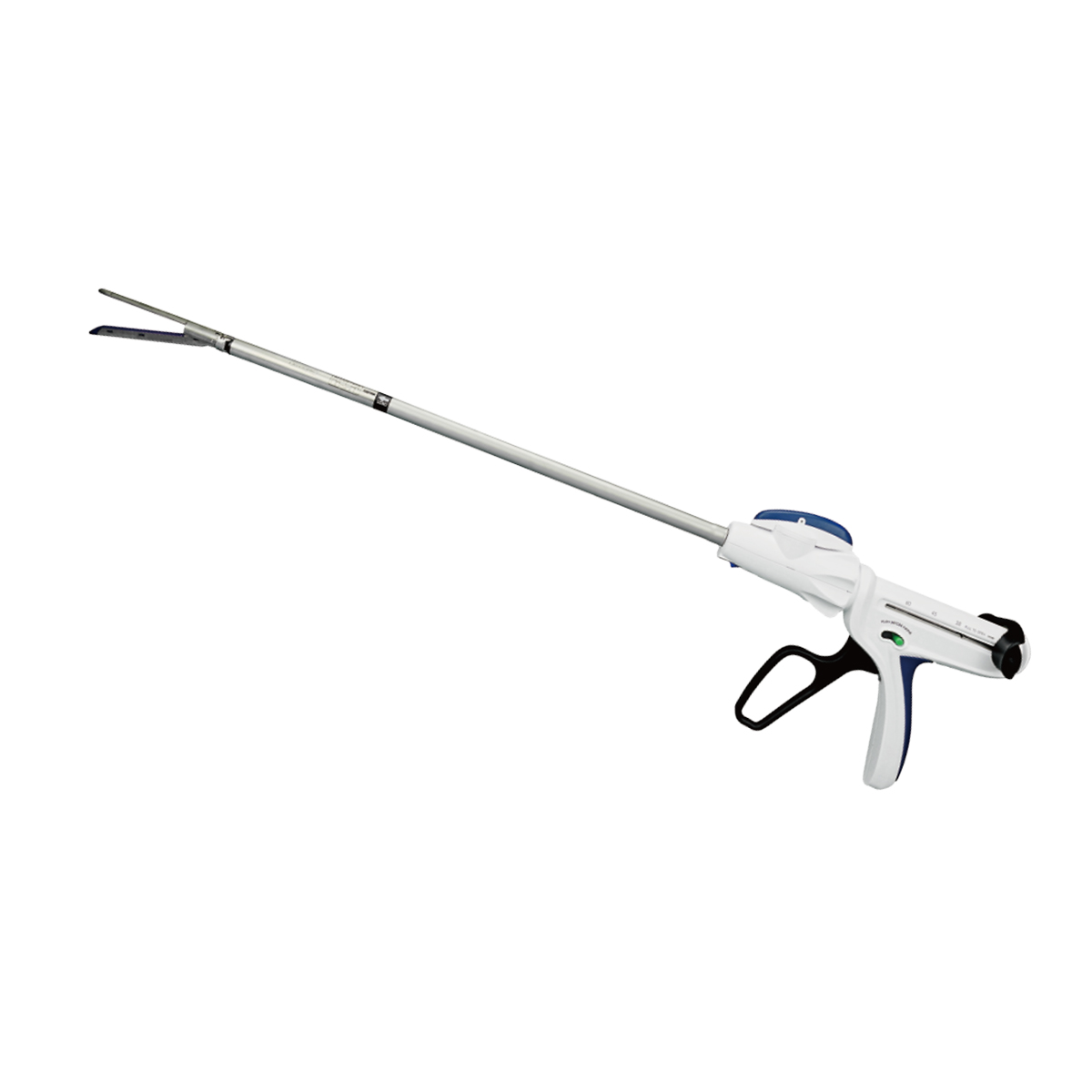
Straight-firing staplers often prove mechanically insufficient for complex procedures. Surgical fields requiring acute angles present immense anatomical challenges. Lower anterior resections and VATS lobectomies demand flexible access. Rigid instruments simply cannot navigate deep into the pelvis or maneuver safely around delicate pulmonary vessels.
This reality necessitates advanced engineering. Articulating Endoscopic Stapler Reloads solve this problem by utilizing a geared or cable-driven joint at the distal shaft. This mechanism allows up to a 45-degree deflection left or right. Crucially, it achieves this articulation without compromising the internal knife track. The flexible joint transfers force seamlessly to the distal sled.
Proper angulation directly impacts staple line security. Articulation ensures the surgeon achieves a perfectly perpendicular cut across the target organ. Perpendicular cuts reduce overlapping staple lines. They minimize unnecessary tissue tension. This precise alignment subsequently lowers the long-term risk of anastomotic leaks or painful strictures. Angling the device also improves direct visual confirmation during transection.
During device trials, clinical teams must note specific evaluation criteria. We strongly recommend verifying the smoothness of the articulation mechanism. Test the stability of the jaws once you lock them into an angled position. A poorly designed joint will drift or wobble under tissue pressure. Only select reloads that maintain absolute rigidity once locked.
Attempting to fire the device while actively changing the articulation angle.
Failing to return the jaws to a straight, neutral position before withdrawing through the trocar.
Using excessive force to bend the tip against dense anatomical structures.
Evaluating surgical devices requires translating mechanical features into tangible clinical outcomes. Every specification sheet detail ultimately affects patient safety. Procurement teams must scrutinize these elements closely during the selection process.
Tissue-to-cartridge matching represents a critical evaluation dimension. Surgeons rely heavily on color-coded reloads. White reloads handle delicate vascular structures. Green reloads manage thick stomach or bronchial tissue. The evaluation must rigorously assess the manufacturer's range of closed-staple heights. You must ensure this range provides complete coverage of all targeted procedures at your facility. Mismatched reloads cause immediate tissue damage.
Safety lock-out mechanisms demand equal scrutiny. An empty-cartridge lockout prevents disastrous user errors. These devices must physically prevent the integrated blade from advancing if a spent reload remains installed. If a surgeon accidentally fires an empty cartridge, the blade will slice the tissue without deploying protective staples. A robust lockout neutralizes this primary source of catastrophic error.
Jaw aperture and grasping force also dictate usability. A wider proximal-to-distal jaw opening facilitates easier tissue manipulation. Surgeons can position the device smoothly over bulky organs. Stepped compression ensures the tissue does not slip distally during the high-pressure firing phase. Superior grasping mechanics stabilize the tissue bed before the blade ever makes contact.
Color Code | Open Staple Height | Closed Staple Height | Target Tissue Application |
|---|---|---|---|
White | 2.5 mm | 1.0 mm | Vascular tissue, thin mesentery |
Blue | 3.5 mm | 1.5 mm | Standard gastrointestinal tract |
Gold | 3.8 mm | 1.8 mm | Normal to slightly thickened tissue |
Green | 4.8 mm | 2.0 mm | Thick tissue, distal stomach, bronchus |
Black | 5.0 mm | 2.3 mm | Extra-thick tissue, dense adhesions |
Bringing new surgical technology into a hospital ecosystem involves logistical hurdles. Supply chain dynamics matter just as much as clinical performance. You must weigh these implementation factors carefully before signing a vendor contract.
Hospitals must address the ongoing debate of standardization versus fragmentation. Maintaining multiple stapler brands introduces severe inventory risks. Standardizing on one universal handle platform with interchangeable reloads reduces inventory overhead dramatically. It simplifies sterile processing workflows. It ensures circulating nurses grab the correct reload matching the correct handle during high-stress emergencies. A unified ecosystem eliminates dangerous compatibility guesswork.
Training and adoption require dedicated resources. Disposable models require no reprocessing, which saves time. However, surgical staff still require rigorous in-servicing. Reps must teach teams proper reload seating techniques. Staff must understand safety overrides. Surgeons need refresher courses on recognizing absolute contraindications, such as firing on ischemic or necrotic tissue. Education bridges the gap between a good tool and a great outcome.
Conducting a proper cost-per-case analysis requires a broader perspective. We challenge the industry's historical focus on initial unit costs. Cheaper devices often cost more over the long term. Advise your committees to calculate overall clinical efficiency. Factor in potential reload failure rates. Account for device-related operating room delays. Most importantly, evaluate the incidence and massive financial impact of postoperative anastomotic leaks. Clinical value must always supersede basic unit price.
The true value of a disposable endoscopic cutting stapler lies entirely in the predictability of its mechanical sequence. From the initial tissue compression to the final B-shape staple formation, every step must execute flawlessly. A breakdown in this synchronized process directly compromises patient safety and procedural success.
Clinical and procurement teams should refine their shortlisting logic based on specific mechanical merits. Filter your device options based on safety lockout reliability. Prioritize reload versatility, specifically evaluating articulating capabilities for complex anatomical access. Assess the quality of manual tactile feedback versus powered consistency to match your specific surgical volume needs.
We encourage readers to take immediate action on device evaluation. Request full technical specification sheets from vendors. Arrange comparative wet-lab demonstrations to feel the mechanics firsthand. Finally, review independent, peer-reviewed complication rate data for all shortlisted devices before finalizing your implementation strategy.
A: Modern devices use specialized mechanical designs on the jaw surface to secure tissue. Many feature stepped anvil designs or gripping ridges along the cartridge. During the pre-compression phase, the jaws clamp down firmly to stabilize the target structure. Proper compression extrudes interstitial fluid and flattens the tissue bed. These combined mechanisms eliminate distal slipping before the blade advances.
A: The reload cartridge itself is strictly single-use. Once fired, you must discard it immediately. However, you can typically reload the main stapler handle multiple times for the same patient during a single procedure. Always consult the manufacturer's Instructions for Use (IFUs), which specify the absolute maximum number of permitted firings per handle.
A: Objective limitations exist for manual firing mechanisms. Surgeons must not use them on severely edematous tissue. You should avoid firing across heavily calcified vessels. They are also contraindicated for any tissue thicknesses falling outside the maximum closed-staple height of available reloads. Forcing a manual device through compromised tissue greatly increases the risk of staple line failure.
A: Modern designs eliminate dull blades through strategic structural engineering. A fresh, sterile knife blade is physically integrated into every individual disposable reload cartridge. You never reuse a blade across different firings or patients. This mechanism ensures maximum sharpness every time. A pristine blade minimizes tissue tearing and promotes clean transection at the anastomosis site.


